They Were Human Too

Recent events in my life have made me think about the personal ups and downs of my ancestors.  Two very dear friends have lost parents, a cousin got married, and someone close to me finally brought their adopted children home to stay forever.  Similar moments of immense joy and deep sadness, were undoubtedly experienced by those who came before us.

We might feel rather disconnected from our family who lived hundreds of years ago. They lived in a world unrecognisable to us in terms of transport and technology, but fundamentally we are the same – humans experiencing the same stages in life, facing the same emotions. It’s very easy to build a family tree with names, places and dates – even occupations and hobbies – but unless you are fortunate enough to obtain private diaries or letters, it’s difficult to truly know the personal feelings and thoughts of an individual. However, if we just pause for a moment and consider what we discover in documents, we might be able to empathise and acknowledge how they might have responded emotionally to such experiences that shaped their lives.

Many of my ancestors were poor and illiterate, hence no secret memoirs were kept and handed down; nor have I found any obituaries in local newspapers.  This has often left me wondering about their experiences. If I had a time machine, there are innumerable questions I’d ask them.

How did Rebecca Monksfield snr. feel after surviving the birth of her triplets in 1824?  She and the babies survived, but how did that impact the family?  Now a household of 9 – was she concerned about how she would feed them all?

How did East Londoner James Perry cope with the new culture (and weather!) of South Africa, during his missionary work with the Congregational church?

Was Jean Rondeau frightened, arriving in England in the late 1600s barely speaking a word of English?  Did he know any other Hugeunots in London?

William Hogarth, Four Times of the Day, Noon

Did Amelia Mary Ann Tage miss her home in Germany when her father brought the family to London in the mid-1800s?  Did she make friends easily?

How did Jane Elizabeth Gowlland manage the distress of losing both her husband and son to suicide?  Did they suffer with depression?  How did that affect the rest of the family?

We could never truly understand exactly how our ancestors felt, because we will always, no matter how hard we try, distort our empathy with a 21st century perspective. However, I implore you to stop for a minute the next time you look at a document referencing your ancestor, and consider what might have been going on in their life at that time. Do you think they were joyful, angry, excited, sad, scared, ashamed, anxious, relieved, or perhaps a mixture of emotions? Take that moment to connect with the name in your tree, and remember them as a person.

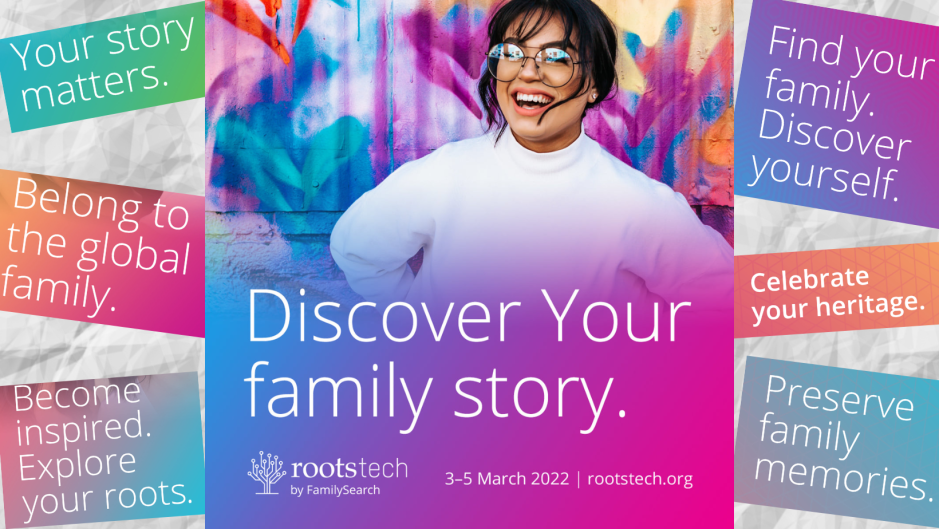
RootsTech 2022

It’s the biggest event in the genealogy calendar, bringing together millions of people worldwide to celebrate family history. Founded in 2011, the first RootsTech conference was held in Salt Lake City, Utah. It’s huge success prompted organisers to travel across the Atlantic, to stage the show in London in 2019. Originally an in-person exhibition, RootsTech was interrupted in 2020 due to COVID. But family historians didn’t miss out; the brilliant team behind the scenes delivered a virtual event, which proved to be surprisingly triumphant.

Sponsored by FamilySearch (The Church of Jesus Christ of Latter-day Saints), the annual conference is accessible – and FREE – to people across the globe, from the comfort of their own home.

But the 2022 RootsTech conference was 4 months ago I hear you say, why are you writing a blog about it now?  Well, I wanted to remind you that the show’s thousands of classes are still available online.  With topics ranging from DNA to Storytelling, Online Dutch Records to Chinese Tombstones, there really is something for everyone.

The live online event back in March, was full of fantastic Keynote sessions from the likes of Maysoon Zayid, Matthew Modine, and the man himself – the president and CEO of FamilySearch, Steve Rockwood. There was so much to see, including product demos of innovative technology in the ‘Expo Hall’, it was impossible to catch everything during the three days; which is where the brilliant Playlist tool became invaluable. 

You can simply search the list of talks, click on the sessions you want to watch, and add them to your personalised playlist to view later.  The presentations are available until March 2023, so you have plenty of time to experience what’s on offer.

So far, my favourite sessions have been from Dave Annal, Nick Barratt, Michelle Leonard, Janet Few, Jenni Phillips, Debbie Kennett, Aoife O’Connor, Sue McNelly, Michelle Patient and Else Churchill (although there are still many more I’m planning to watch, including some from Melanie McComb, Taralyn Parker and Alison Spring).

If you’d forgotten the sessions are still available to view (or have been living under a rock and hadn’t heard about this brilliant event), take a look at the website here.

I’d like to leave you with a little something from this year’s show, an extremely catchy song that I love, created just for the conference, celebrating the ethos of RootsTech – Connection.

Breaking News : Next year’s exhibition will be a new hybrid event, taking place in Salt Lake City and online from 2nd-4th March 2023.

Cracking Calendar Confusion

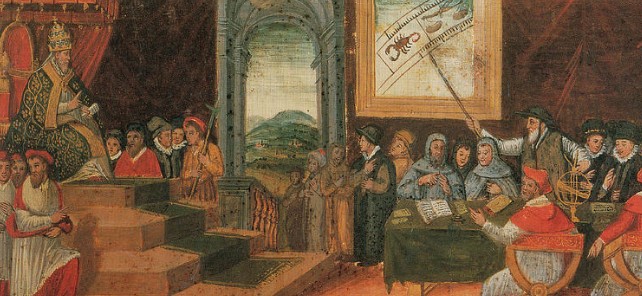
Converting the Julian/Gregorian calendars often left me feeling a little bewildered. I could never quite remember the significant dates that enable you to work out which ‘year’ an event took place. I needed something to help me make sense of it all, so I came up with this little poem. I hope it may be of use to you too sometime.

Pope Gregory XIII Calendar Reform; Granger Collection; FineArtAmerica.com
In 1582, we saw the debut
of a new calendar style.
Pope Gregory decreed, and the Catholics agreed
but global belief took a while.

The loss of 10 days, aligned the moon’s phase
with ecclesiastical dates.
Fifteenth followed fourth, October thenceforth
set the diary that now dominates.

In 1752, adoption ensued
of England’s Gregorian reform.
New Year was reversed to January the first, 
and our calendar year was transformed.
OS or NS, I must now confess,
often leave me rather befuddled.
March 1604, could be therefore,
‘05 or ’03 (now I’m puzzled!).

It all depends, beginning or end,
just when in the month the day be.
Post or before, you must not ignore,
Lady Day (25th) this is key.

So let’s work this out, and eradicate doubt
of dates from Julian years.
Below is a table, which I hope will enable
to allay your conversion fears.

“Since the discrepancy between the Julian calendar year and the astronomical seasons kept growing over time in the centuries that followed, more days had to be skipped in countries that switched to the Gregorian calendar in later years.......The UK dropped 11 days when it converted in 1752.”
www.timeanddate.com/calendar/julian-gregorian-switch
Give Us Our Eleven Days; William Hogarth; Historic-uk.com

Why should you study genealogy courses?

So, you’ve been working on your family tree for years, you’re an expert on Ancestry, a frequent user of FindMyPast, and can easily navigate the database of FamilySearch.  Why should you take a genealogy course?  Well, I’m about to tell you.

In 2016, I had been researching my family history for well over 15 years.  I’d helped numerous friends build their family trees, and felt rather confident around genealogical websites and record collections.  Then, I encountered something in my research that was unfamiliar to me.  I was aware that a certain set of records existed, but up until that point I had never needed to examine them.   I wanted to do the job well, and the only way I could ensure I was interpreting the documents correctly, was to learn more about them.  I had a choice: read lots of books or take a course.  I’d actually been toying with the idea of returning to studying, so that option won – now I had the task of choosing what, where and when.

I had recently attended the Who Do You Think You Are? exhibition in Birmingham, and had spotted some representatives from universities and institutes, so I knew the courses existed, but which one was right for me?

I’m not going to go into detail of the pros and cons of Dundee versus Strathclyde, or Pharos v IHGS, this blog is to share with you what you can gain from enrolling on a course.  You can investigate the different providers yourself and choose which one best suits your own personal situation.

It had been a very long time since my brain had had any academic exercise, so I was rather nervous as to whether I could handle it – but I needed to do this.  I always like to perform a job well, and I realised my knowledge wasn’t as deep as I thought it was.

I chose to enrol with Pharos Tutors.  Their Distance Learning Intermediate Certificate Course Family History Skills & Strategies is tutor-led, can be started at any time of the year, and seemed to suit me perfectly. You can pick and choose which modules you take when; and as long as you complete (and pass) all ten assessed units within a three year period, you receive the Intermediate Certificate.  The fact that I could pay for each module as I took it, suited my pocket too.

Each unit taught a different subject within the field of genealogy.  They ranged from Nonconformity to Wills and Administrations, Employment Records to Poor Laws.

Yes I had lots of experience with many of the collections discussed, but studying these modules allowed me to delve deeper into why the records were created, the change in legislation that caused them to be, who should appear within them, but also who might be excluded.  I soon began to recognise that my knowledge of the documents I had been exploring for years was actually rather superficial.

The tutors were super supportive, and so were my fellow students.  The format of the course was to receive a lesson (via email) for each week of a module.  We would need to complete exercises and post our answers in an online forum; which often prompted questions, and the subsequent discussions frequently highlighted recommendations for books or websites.  The collaboration continued with a weekly online text chat where we would discuss what we had learnt that lesson. Each unit concluded with two assignments which would be assessed by the tutor.

As the months rolled by, I was becoming more and more motivated to study further.  I had caught the studying bug! I was growing ever confident with my research skills, and making friends with the students. 

A feeling of camaraderie was developing, and those who lived near each other made plans to meet up in person.

We shared details of other courses we had seen advertised, and I enrolled onto some short classes. IHGS were offering some one day tutorials, and I signed up to Civil Registration, Palaeography and How To Draw a Pedigree Chart on Powerpoint – which were all great. Then I spotted Family Tree Magazine were hosting a DNA Bootcamp course led by the brilliant Michelle Leonard. I was really keen to expand my understanding of DNA in family history, so I went for it. It was fantastic. Weekly lessons held via Zoom, with handouts of what we were taught being emailed to us.

Before I knew it, the Pharos Intermediate Course was coming to an end, and I’m happy to report I passed with flying colours. This qualified me to be accepted onto their Advanced Course, which I did not have to think twice about. I’m currently two-thirds through the first year and I am still loving it. Several of my fellow students from the Intermediate Course are with me, and we communicate regularly outside of the course’s forums to help and encourage each other.

So, in answer to the question ‘Why should you study genealogy courses?’ I have three things to say:

How My Parents Met

Tomorrow is my mum and dad’s 45th wedding anniversary, and as I’ve previously concentrated on ancestors further back in my family tree, I thought this was the perfect opportunity to tell a more recent story – How My Parents Met.

Wendy Perry was born in Wanstead Hospital in 1955. The family moved from Forest Gate to the East Ham Estate in Brentwood, Essex in the early ’60s. Just a few years later they took part in a council house exchange to a property a mile up the road in Ingrave.

Mum with her grandparents Alfred and Ellen Bush (née Bennett)

George Ernest Gray was born in 1951 in the East End Maternity Hospital, Stepney; this being the closest maternity hospital to the family home – a flat in Frances Gardens, South Ockendon, Essex. When George was 18 months old, the Gray family moved to a house just a few hundred yards away.

Dad, circa 1952

Following his apprenticeship, Dad worked in the New Model Programme Control department, planning office refits at the nearby Ford Motor Company in Arisdale Avenue. In 1974, Mum (who was working as a temp), was posted to the same office in the role of Punch Card Operator.

This is the type of IBM keypunch machine used in the 1960s and 1970s. Operators by the tens of thousands would spend a full shift keypunching orders, time cards and a host of other transactions. https://www.pcmag.com/encyclopedia/term/keypunch-machine

One day, Mum went to buy a cup of tea from the machine, but found she was 5p short.  She asked Dad if he would be kind enough to lend her 5p and that was it – the start of the romance. Their first date was at a pub, not far from work. Mum being the modern woman she was, insisted on buying Dad a drink.  Expecting him to ask for half a pint of beer or something similar, when he replied with “I’ll have a Bacardi and Coke please.”  she was embarrassed to say she couldn’t afford it. We joke that Dad should have realised then that Mum was only after his money!

For two years, their courtship consisted of driving around in Dad’s purple Mini and meeting up with friends. Mum recollects many an afternoon spent in my grandparents’ lounge with a couple of friends called Fid and Diane (Fid was a nickname for Steve, although my dad can’t remember how that nickname came about). Fid and Dad would play their guitars and sing songs – their favourite being The House of The Rising Sun. Dad soon upgraded the purple Mini to a metallic green Cortina with a stereo that played tape cassettes. They would listen to the likes of Bread, Status Quo, Yes, 10CC, Styx, and the Beatles.

There was no romantic proposal. My parents tell me they were looking in a jewellery shop window one day, both spotted rings they rather liked, so decided to buy them.

Wendy Perry and George Ernest Gray were married on 5th March 1977, at St Nicholas’ Church, Ingrave. The Best Man was my uncle Steve (Dad’s brother). As we have such a large family, rather than choosing and upsetting anyone, my parents decided against having any Bridesmaids or Page Boys. They couldn’t afford a honeymoon, but did spend the wedding night at Ye Olde Plough House in Bulphan.

St Nicholas’ Church, Ingrave
By Robert Edwards, CC BY-SA 2.0, https://commons.wikimedia.org/w/index.php?curid=8205084

Happy Anniversary Mum and Dad. Here’s to many more happy years ahead.

If you would like to discover how my maternal and paternal grandparents’ love stories began, you can read all about them here. Please feel free to share how your parents or grandparents met in the comment box below.